Heritage fire doors – A full solution
The Heritage Fire Door Paradox: Protecting Lives Without Sacrificing History
The challenge of upgrading fire safety in historic, listed buildings represents one of the most complex tasks in modern construction. At the heart of this challenge lies the fire door. These essential components are the first line of defence, designed to contain smoke and fire, protecting both life and the priceless heritage assets they inhabit. However, installing modern, compliant fire doors often risks violating the fundamental conservation principle of minimal intervention.
Successfully navigating this paradox requires a highly specialised, dual-expertise approach that marries stringent fire safety certification (such as BM Trada Q-Mark) with deep knowledge of traditional building fabrics and conservation philosophy.
The Imperative and the Conflict

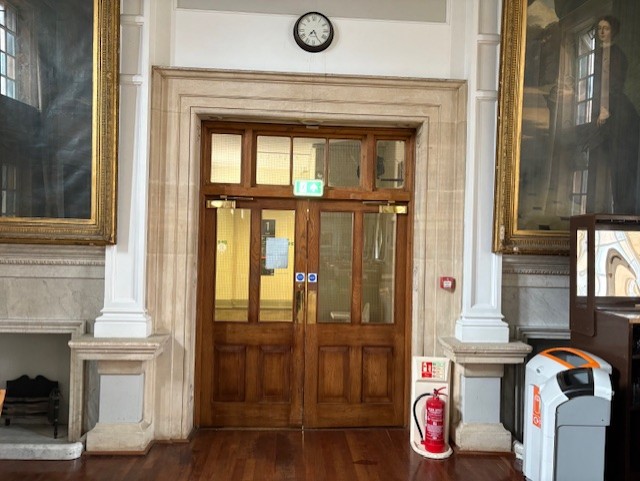
For heritage properties like the Grade Listed Founders Building at Royal Holloway University of London, the requirement for works is necessary to improve fire safety and means of escape routes, and to protect life. By efficiently reducing the speed at which smoke and fire can spread, these upgrades also help to protect the heritage asset itself.
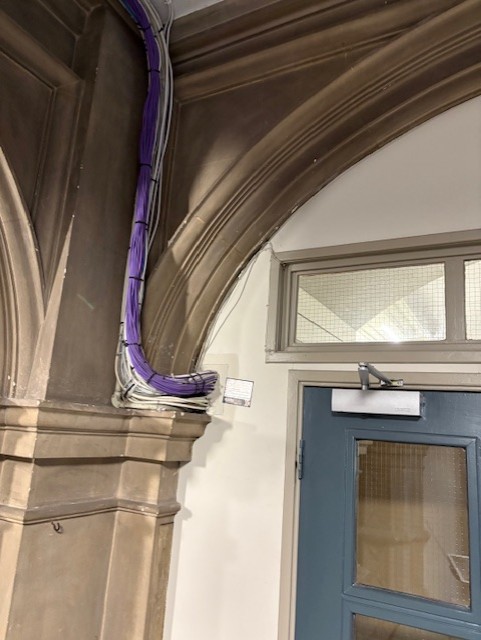
The core conflict arises because modern fire protection standards demand robust, heavy, and precisely fitted doors. Yet, historic structures—often featuring delicate plaster mouldings, stone surrounds, and non-standard openings—were never designed to accommodate such components.
To proceed, any work on a listed structure must first secure Listed Building Consent, which governs the careful removal of existing door leaves, frames, and associated walls, and specifies their replacement with fire-rated alternatives. All works must be sympathetic to the historic fabric, ensuring any existing original materials are carefully retained or reused where possible.
Defining Compliance: The Modern Standard in a Historic Context
In heritage remediation, compromise on fire integrity is not an option. New doors must be certified to meet current standards, such as being proven adequate for 30 minutes integrity performance (FD30) or 60 minutes (FD60) in accordance with standards like BS 476:Part 22 1987. New doorsets, complete with linings and stops, must also be provided with equivalent BWF/CERTIFIRE certification.
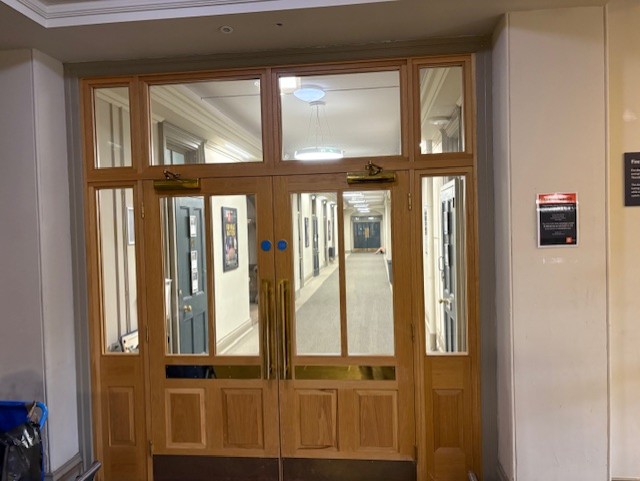
For specialist contractors like TP Construction, this compliance extends beyond the manufacture of the door itself to the installation methodology. The deep expertise developed over 20 years of experience in conservation and renovation is crucial for navigating the unique complications of historic buildings present in meeting modern building regulations. This includes the ability to handcraft bespoke, made-to-measure doorsets that faithfully replicate the appearance of Victorian, Edwardian, or Georgian architecture while achieving the highest safety standards. They offer a full heritage door repair and upgrade service, including upgrading non-fire doors to compliant fire doors.


The Conservation Philosophy: Minimal Intervention and Precision
Successful heritage fire door remediation hinges on strict adherence to a conservation philosophy. This is not merely an advisory guide but a mandatory discipline for specialist contractors when engaging with historic fabric.
The key tenets of this approach include:
- Extensive Documentation: All work must be extensively documented in both photographic and annotated forms; this record is required before, during, and after any intervention.
- Minimal Intervention: The principle of minimal intervention should be rigorously adhered to.
- Like-for-Like Repair: Repairs should only be carried out with documentary evidence, avoiding speculative works. Wherever possible, like-for-like repairs should be executed, and the introduction of any “foreign” materials should be kept to an absolute minimum.
- Aesthetic Preservation: New repairs should not disturb the overall aesthetics of the architecture, though they may be intentionally designed to be notable under close scrutiny by a specialist.
This process necessitates using only craftspeople who are experienced with traditional materials. For instance, when making mortar repairs to internal stone surrounds, specialists must protect adjacent surfaces, remove dust, pre-treat the stone with a slurry mix, and apply the repair mortar (typically a mix of NHL 3.5 Naturally Hydraulic Lime and aggregate) as dry as possible to match the stone profile. Crucially, repairs must be kept damp and protected to prevent rapid drying out, cracking, and subsequent failure.
A Partnership of Trust and Final Approval
The successful execution of fire door remediation in heritage sites requires a full-service solution team that possesses a comprehensive understanding of the entire process. The involvement of certified experts, including those with BM Trada Q-Mark certification (the UK’s highest fire door accreditation standard), is non-negotiable for both craftsmanship and installation quality.
The process concludes with critical oversight: the Conservation Officer must be notified before works begin and must liaise with the contractor at key stages, such as after the door removal and before the final installation.
Final sign-off and photographic record upon completion serve as the ultimate assurance that the project has met the twin demands of protecting both life and legacy. By integrating modern fire safety requirements with meticulous conservation methodology, specialist contractors ensure that the doors of Britain’s most precious buildings remain open to the future while honouring the past.